
VisiFlora: What's in the Capsule, How It's Sold, and What to Know
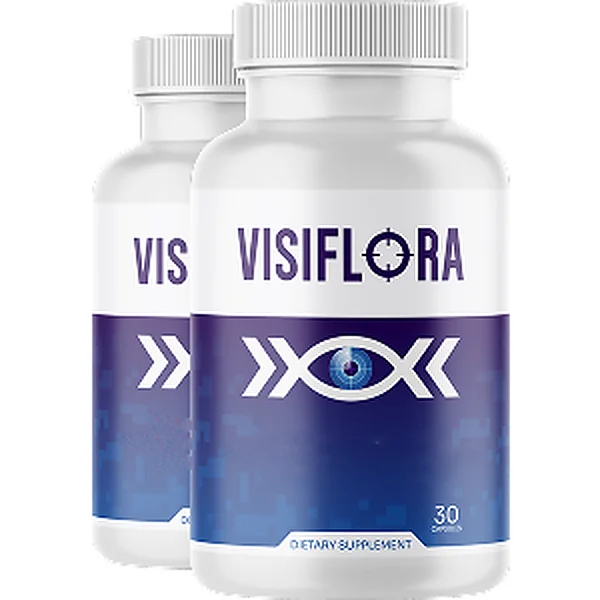
VisiFlora is a one-a-day capsule sold online as an eye-health supplement with a gut-health twist. Below: its label, how it is sold, the research on its headline ingredients, and the purchase terms. Every page was read on November 3, 2026; none of the selling sites is linked.
In short: the label gives real amounts for seven vitamins and minerals, each near one day's worth. The eye-specific extracts the ads talk about most, from lutein to saffron, share one 351 mg blend that gives no per-ingredient amounts.
What VisiFlora Is and How It's Sold
A bottle holds 30 plant-based capsules, one month at one a day, and there is no single-bottle option. Two storefronts sell the same bottles at the same prices: tryvisiflora.com, with a text page and a video page and payment through BuyGoods, and getvisiflora.com, with payment through ClickBank. The BuyGoods page says VisiFlora is sold only there; the ClickBank page calls itself the official offer.
The pitch rests on a "gut-eye connection," the idea that bacterial toxins from the digestive tract (lipopolysaccharides, or LPS) reach the eye and that this capsule counters them, plus a military theme, from a "Military-Inspired Formula" label line to a video about a short Air Force routine. The ClickBank version tones the story down and drops the toxin language.
Two more "official" sites, visiflora.org and visiflora.net, are affiliate pages whose order buttons pass through a ClickBank affiliate redirect to getvisiflora.com, and a page branded for another eye capsule, OptiVell (optiwell.us), now forwards buyers to VisiFlora's video page.
What the Label Actually Says
The sales page prints one amount, 11 mg of zinc. The full panel appears only as a picture on the seller's contact page, the same file on both storefronts. Transcribed as printed:
| Ingredient | Amount | % Daily Value |
|---|---|---|
| Vitamin A (as beta-carotene) | 450 mcg RAE | 50% |
| Vitamin C (as ascorbic acid) | 90 mg | 100% |
| Vitamin E (as dl-alpha tocopheryl acetate) | 15 mg | 100% |
| Zinc (as zinc oxide) | 11 mg | 100% |
| Selenium (as selenium AAC) | 20 mcg | 36% |
| Copper (as copper gluconate) | 0.9 mg | 100% |
| Chromium (as chromium picolinate) | 15 mcg | 43% |
| Proprietary blend: taurine, ginkgo leaf, eyebright, grape seed extract, Coleus forskohlii root, alpha-lipoic acid, rutin, quercetin, bilberry fruit extract, saffron stigma extract, lycopene, lutein from marigold, zeaxanthin, astaxanthin | 351 mg total | Not established |
Other ingredients: hypromellose (the capsule), rice flour, magnesium stearate and silicon dioxide. "Distributed by" reads PhytoThrive Labs, Aurora, CO 80011: a town and ZIP code, with no street, phone number or website.
Three details stand out. The panel names 21 ingredients against the "22-in-1" in the ads. Fourteen of them share 351 mg, about 25 mg apiece if split evenly, and federal rules let a proprietary blend print only its total. And the same contact page shows a second label, for a fiber-and-probiotic capsule called VisiBoost Pro from the same distributor: the probiotic is in that bottle, not in VisiFlora.
What Research Says About the Main Ingredients
The best-tested eye supplements come from the National Eye Institute's AREDS trials. The AREDS2 formula supplies 500 mg of vitamin C, 400 IU of vitamin E, 80 mg of zinc, 2 mg of copper, 10 mg of lutein and 2 mg of zeaxanthin a day. VisiFlora's vitamin C and zinc are about a fifth and a seventh of those amounts, its vitamin E and copper are lower too, and its lutein and zeaxanthin are undisclosed.
Who was studied matters as much as the dose. AREDS2 enrolled 4,203 adults aged 50 to 85 who already had an intermediate stage of age-related macular degeneration, and adding lutein and zeaxanthin to the earlier formula did not significantly change five-year progression in the main analysis: 29% against 31% on placebo. NEI notes that the first AREDS trial showed no benefit for people without the condition or with only early signs.
- Saffron. A 2026 systematic review counted ten small trials of 20 to 50 mg a day in people with diagnosed eye conditions and asked for larger ones. In an earlier crossover study of 25 people, 20 mg a day changed a measured retinal response; its authors called for replication. VisiFlora's saffron dose is not printed.
- Bilberry. The sales page cites World War II pilots eating bilberry for night vision. NCCIH says the story may have been superstition or a cover for radar advances, and that the most rigorous studies found no night-vision improvement in healthy people; a review of 12 placebo-controlled trials found the four most recent randomized ones all negative.
- The gut-eye idea. Gut microbes and eye health are a genuine research topic, but a 2023 review the seller itself cites calls the field emerging and names probiotics and prebiotics as possible future tools. Neither is on VisiFlora's label.
- VisiFlora itself. PubMed lists no study of the product. The seller's 22-link references page includes a survey of eye-disorder rates in the military, a lab study of beta-carotene in retinal cells and the original high-dose AREDS trial; none tested VisiFlora.
Facts Worth Checking Before You Order
- Who is responsible. A web search found no company called PhytoThrive Labs, the terms page names the company only as "VisiFlora," and support is an email address at visiflora.com, a domain that loaded no website when we tried it.
- Where returns go. Refunds require shipping every bottle to 19655 E 35th Dr #100, Aurora, CO 80011, the Colorado location listed by shipOffers, a fulfillment company that ships for other brands. MalwareTips found the same address on OptiVell's return page. A fulfillment warehouse is not a manufacturer.
- A seal that cannot be accurate. The BuyGoods page displays five round seals, one claiming federal approval, yet the FDA says it has no authority to sign off on dietary supplements before they are sold. The ClickBank page leaves that seal strip out.
- Lookalike pricing. visiflora.org and visiflora.net repeat that seal and quote two bottles at $69 each; the storefront they forward to lists $79.
- After you pay. Checkout leads to an offer of three more bottles at $39 each under a 15-minute timer, with copy warning that stopping early could make eye problems worse, then a two-bottle offer at the same price. We found no evidence behind that warning.
Price and Refund Terms, as Listed
| Package | Per bottle | Total | US shipping |
|---|---|---|---|
| 2 bottles | $79 | $158 | Small fee ($9.95 listed) |
| 3 bottles | $59 | $177 | Free |
| 6 bottles | $49 | $294 | Free |
Each card shows a struck-through $99 "regular" price and three bonus e-books; shipping to Canada, the UK, Ireland, Australia and New Zealand is $19.95. The refund window is 60 days from delivery: every bottle goes back to the Colorado warehouse at your cost, and the refund excludes shipping fees. Charges appear as BuyGoods or ClickBank (CLKBANK*COM), and both storefronts describe a one-time charge with no subscription. The video page also runs a 30-minute countdown.
If You Want an Eye-Health Routine With Every Amount Printed
We won't point readers to VisiFlora: its headline amounts are hidden, the company behind it is hard to identify, and its sales pages lean on claims research doesn't support. If a daily eye-nutrient supplement is the goal, the fairer comparison is an established multi-nutrient formula from a named maker that prints every amount, such as Ocuvite Adult 50+ from Bausch + Lomb.
Ocuvite Adult 50+ Eye Vitamin & Mineral Supplement, 50 Mini Softgels
Made by Bausch + Lomb · one softgel a day with a meal · per softgel: vitamin C 150 mg, vitamin D3 30 mcg, vitamin E 20 mg, zinc 9 mg, copper 1 mg, omega-3s 250 mg (EPA 160 mg, DHA 90 mg), lutein 5 mg, zeaxanthin 1 mg · contains fish oil and soy lecithin · $13.86 ($0.28 per softgel), sold and shipped by Amazon.com, in stock, as seen November 3, 2026
Check Current Price on AmazonPlain link: Ocuvite Adult 50+, 50 softgels, on Amazon.com. As an Amazon Associate we earn from qualifying purchases.
Why this one: an established eye-care company puts its name on the box, every ingredient has a printed amount, nothing hides in a proprietary blend, and it sells through ordinary retail. Cautions: it contains none of VisiFlora's botanicals, and it is not the AREDS2 formula, with less lutein and zinc, so it is no stand-in if an eye doctor has recommended that formula. It contains fish oil, and the Amazon listing says it cannot be returned, citing food safety. We don't promise any effect on your eyes; talk to your doctor or pharmacist before adding a supplement, especially alongside prescriptions.
General information only, not medical advice. New or changing vision symptoms call for an eye exam, not a supplement. Prices, sellers and stock change; figures are as seen on November 3, 2026.
Sources (all opened November 3, 2026):
- National Eye Institute — AREDS/AREDS2 clinical trials, formulas and findings — read the page
- AREDS2 randomized trial in 4,203 adults, JAMA, 2013 — PubMed record
- Systematic review of saffron trials, J Evid Based Integr Med, 2026 — PubMed record
- Saffron 20 mg crossover trial, Invest Ophthalmol Vis Sci, 2010 — PubMed record
- NCCIH — Bilberry — read the page
- Systematic review of bilberry night-vision trials, Surv Ophthalmol, 2004 — PubMed record
- Review of gut-eye axis research, Int J Mol Sci, 2023 — PubMed record
- FDA — Questions and Answers on Dietary Supplements — read the page
- MalwareTips (consumer-security blog) — OptiVell ad-campaign investigation, August 16, 2026 — cited as plain text; not linked.
- PubMed search for “visiflora” — run the search
- shipOffers contact page, Colorado location (shipoffers.com/contact). Not linked.
- Seller and affiliate pages, not linked: tryvisiflora.com (text, video, contact and label, refund, shipping, terms, references and post-checkout pages), getvisiflora.com, visiflora.org, visiflora.net and the optiwell.us order redirect.
- Bausch + Lomb — Ocuvite Adult 50+ label facts (ocuvite.com). Not linked.
- Amazon.com listing B000FEPUEW: price, seller, stock, returns.